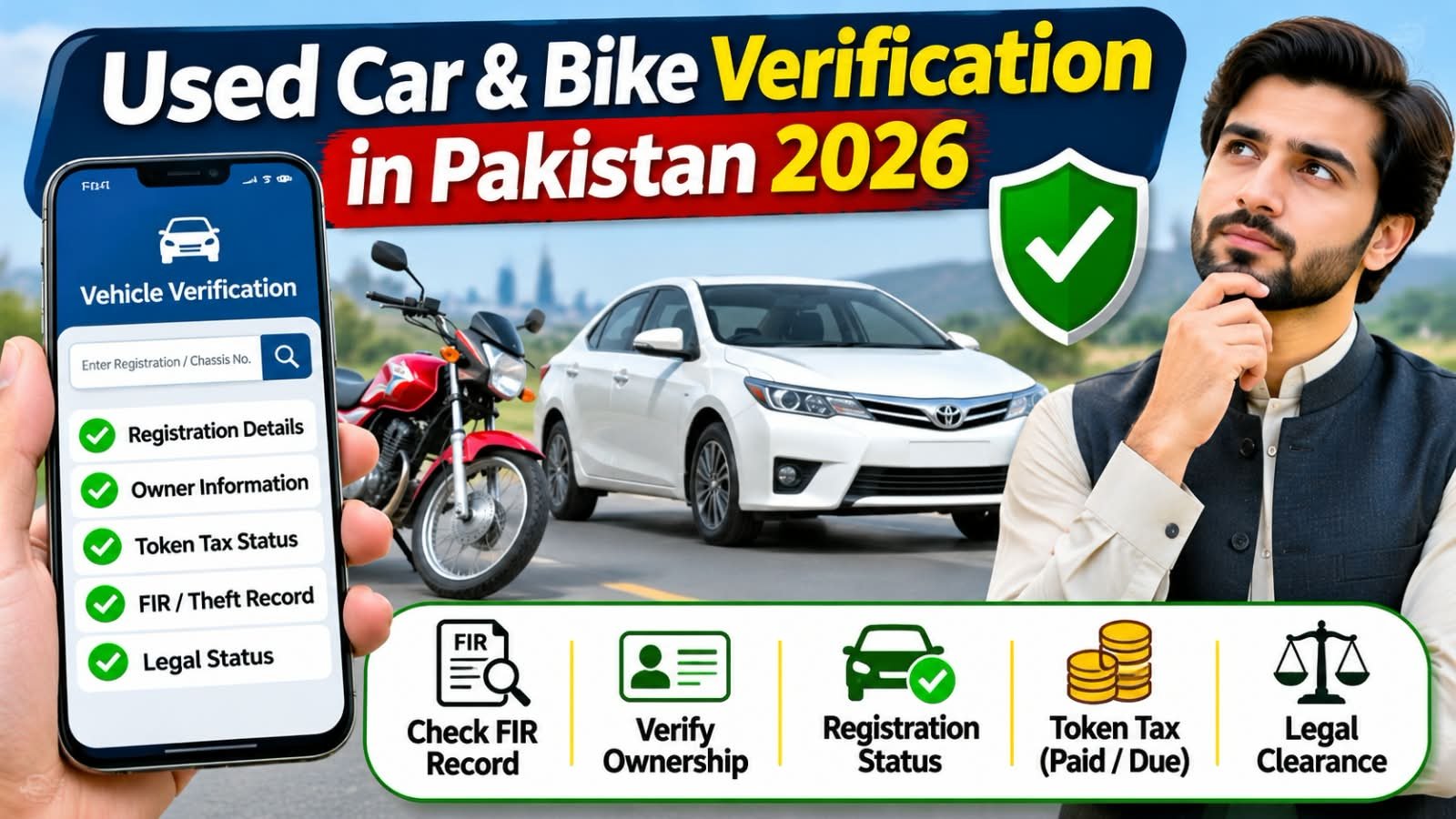
Buying a used car or bike in Pakistan can save you money but one wrong purchase can turn into a serious legal and financial headache. A vehicle may look perfect, yet its registration could be questionable, taxes may be unpaid, or it could have a theft or criminal history.
The good news is that buyers can perform several important checks before paying the seller. By verifying the vehicle registration, ownership details, chassis and engine information, token tax status, and available police records, you can reduce the risk of purchasing a problematic vehicle.
Why Used Vehicle Verification Is Important
Before buying a second-hand vehicle, never rely only on the seller’s verbal promise that the vehicle is 100% clear.
Official vehicle databases can help you confirm whether the registration information matches the vehicle. Punjab’s Excise Department, for example, provides an online registered-vehicle verification service, while Sindh Excise provides online vehicle verification and CNIC-based ownership verification.
A proper verification can help identify:
- Incorrect registration details
- Ownership discrepancies
- Unpaid vehicle taxes
- Mismatch between engine/chassis information
- Suspicious or altered vehicle documents
- Possible stolen or criminally involved vehicles
Step-by-Step Used Car & Bike Verification
1. Check the Registration Number
Start by checking the vehicle’s registration number through the official Excise & Taxation portal for the province or territory where it is registered.
For example, Punjab provides an official online registered-vehicle verification service through its Excise Department.
Sindh also provides an official online vehicle verification system where users can select four-wheelers or two-wheelers and search using the registration number.
2. Match the Engine and Chassis Numbers
Never stop at the registration number.
Compare the information shown in the official record with the physical vehicle:
- Engine number
- Chassis number
- Registration number
- Make and model
- Colour
- Other available registration details
If the physical numbers don’t match the official documents or database, do not proceed with the purchase until the discrepancy is officially resolved.
3. Verify the Owner
Check whether the seller is actually the registered owner or has proper authority to sell the vehicle.
In Sindh, the official Excise system also provides a Vehicle Verification by CNIC facility that can show vehicles registered against a CNIC.
For a private sale, it is safest to complete the ownership-transfer process through the relevant Excise authority rather than relying on an open letter or informal agreement.
How to Check FIR, Theft or Criminal Status
This is one of the most important checks when buying a used vehicle.
An Excise database primarily confirms registration and taxation information. A clean Excise record should not automatically be treated as proof that the vehicle has never been involved in an FIR or criminal case.
For police-related verification, use the relevant police department or official police facilitation service. Punjab’s Smart Police Facilitation Centre, for example, has a vehicle verification module connected with the Anti-Vehicle Lifting Staff system and Excise data.
If you are concerned about a vehicle’s theft or FIR history, ask the relevant police authority for verification and keep the result/documentation for your records.
Check Token Tax and Outstanding Dues
Before buying, confirm whether the vehicle has outstanding token tax or other government dues.
This matters because an apparently cheap vehicle can become expensive after you discover unpaid taxes or transfer-related costs.
Punjab’s official Excise system includes online verification and motor-vehicle tax services. Islamabad Excise also provides online vehicle services, including registration details and token-tax-related facilities.
Physical Inspection Is Also Essential
Online verification cannot detect every problem.
Before making payment, inspect:
- Engine condition
- Chassis and body condition
- Signs of accident repairs
- Engine/chassis number stamping
- Number plates
- Registration documents
- Tyres and suspension
- Electrical system
- Odometer condition
For an expensive purchase, consider taking an experienced mechanic or professional vehicle inspector with you.
Red Flags You Should Never Ignore
Be especially careful if the seller:
- Refuses to provide the registration number
- Says verification is unnecessary
- Wants full payment before ownership transfer
- Offers a price far below the market
- Provides suspicious or incomplete documents
- Claims the original owner is unavailable
- Says the vehicle is clear but refuses official verification
A genuine seller should generally have no reason to prevent reasonable verification.
Official Verification Links
For the safest results, use government websites rather than random third-party vehicle-checking websites.
- Punjab: Punjab Excise – Online Vehicle Verification
- Islamabad: Islamabad Excise & Taxation Department
- Sindh: Sindh Excise – Online Vehicle Verification
For other provinces and territories, use the relevant government Excise/Taxation or police authority.
Final Takeaway
A used car or bike should never be purchased based on appearance or the seller’s promise alone. Verify the registration, ownership, engine and chassis details, tax status, and police/theft status before handing over your money.
Most importantly, remember that Excise verification and police verification are not exactly the same thing. Use both where appropriate, complete the legal ownership transfer, and keep copies of your verification records.
A few minutes spent checking a vehicle in 2026 could save you from losing a large amount of money or becoming involved in someone else’s legal problem.